
How to
Difference Between Prams, Pushchairs, Strollers, and Buggies
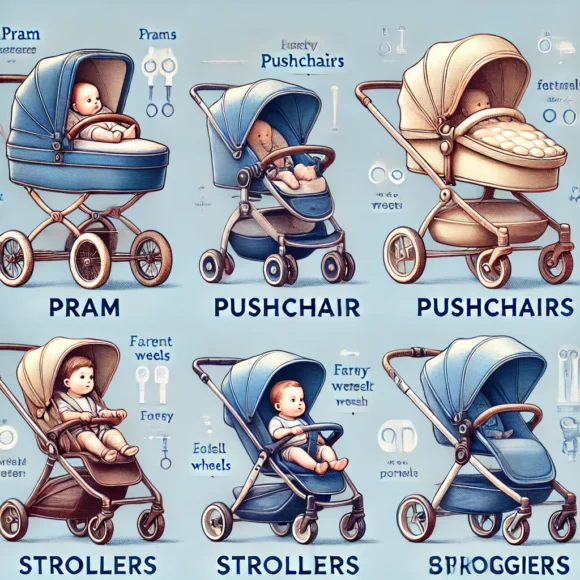
Mar
1. Prams
Definition: A pram (short for “perambulator”) is a baby carriage designed primarily for newborns and infants. It provides a fully flat reclining position, allowing babies to lie down comfortably.
Features
- Fully reclined sleeping area: Ideal for newborns who need to lie flat for proper spine and lung development.
- Large, sturdy wheels: Designed for a smooth and stable ride, even on rough terrain.
- Parent-facing design: Allows parents to keep eye contact with their baby.
- Canopy and cushioning: Provides protection from the sun, wind, and rain.
- Heavier and bulkier: Prams are usually not very portable due to their size and weight.
Pros
✔ Perfect for newborns and young infants.
✔ Offers a comfortable and secure sleeping space.
✔ Smooth ride due to large wheels.
✔ Parent-facing feature promotes bonding.
Cons
❌ Bulky and heavy, making it difficult to transport.
❌ Takes up more storage space.
❌ Not suitable for older babies or toddlers who prefer to sit up.
Best for:
- Newborns (0-6 months).
- Parents who take long walks and need a sturdy, smooth-rolling baby transport.
- Those who prefer a classic and luxurious look.
2. Pushchairs
Definition: A pushchair is a more versatile version of a pram that allows babies to sit upright or recline as needed. They are suitable for both newborns and older babies.
Features
- Reclining seat: Can be adjusted to different angles for sitting, reclining, or sleeping.
- Forward and parent-facing options: Some models allow parents to switch seat directions.
- Foldable but heavier than strollers: Most pushchairs are collapsible but may still be bulkier than strollers.
- Sturdy wheels and frame: Designed to handle different terrains, making them great for outdoor walks.
Pros
✔ Suitable from newborns to toddlers.
✔ More flexibility with seat adjustments.
✔ Can be parent-facing or forward-facing.
✔ Sturdy and durable, often lasting longer than strollers.
Cons
❌ Heavier and bulkier than strollers.
❌ May not be as compact when folded.
❌ Some models can be expensive.
Best for:
- Babies from birth to around 3 years (depending on the model).
- Parents who want a long-term investment that grows with their baby.
- Those who need a sturdy and adaptable option for everyday use.
3. Strollers
Definition: A stroller is a lightweight, foldable, and compact baby transport designed primarily for toddlers and older babies who can sit up independently.
Features
- Forward-facing design: Unlike prams and pushchairs, strollers typically do not allow babies to face their parents.
- Lightweight and portable: Many strollers are easy to carry and fold, making them perfect for travel.
- Smaller wheels: More suitable for smooth pavements rather than rough terrain.
- Basic comfort features: Some may have a slight recline but are generally designed for sitting rather than sleeping.
Pros
✔ Compact and easy to transport.
✔ Ideal for quick trips and travel.
✔ Lightweight and easy to push.
✔ Usually more affordable than prams or pushchairs.
Cons
❌ Not suitable for newborns (unless it has a full recline).
❌ Less comfortable for long naps or extended use.
❌ Smaller wheels may not handle rough terrain well.
Best for:
- Toddlers (6 months to 4 years).
- Parents who need a lightweight, travel-friendly option.
- Short trips, shopping, and public transportation use.
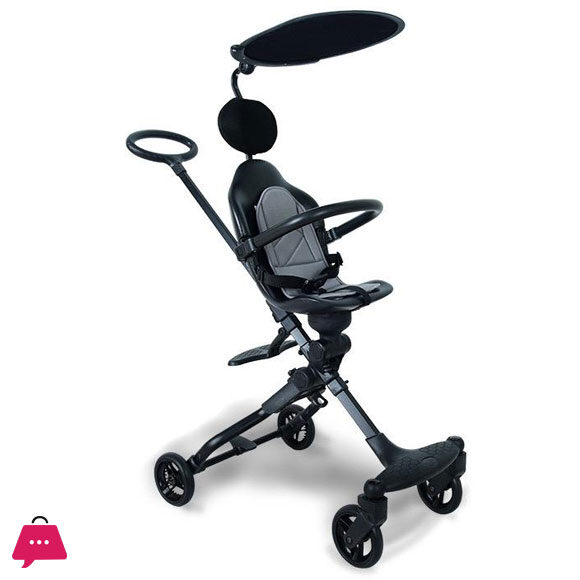
Magic Stroller Pram Foldable imported for travelling walker Cabin Friendly
4. Buggies
Definition: The term “buggy” is commonly used interchangeably with “stroller,” especially in the UK. It generally refers to a lightweight, foldable stroller designed for older babies and toddlers.
Features
- Lightweight and compact: Designed for convenience and easy folding.
- Simple seating with a basic recline: More suitable for short trips rather than extended comfort.
- Easy to maneuver: Ideal for urban areas and smooth pavements.
- Umbrella fold: Many buggies fold into a slim, compact shape.
Pros
✔ Extremely portable and easy to store.
✔ Perfect for travel and short outings.
✔ More affordable than pushchairs and prams.
Cons
❌ Not as sturdy or durable as pushchairs.
❌ Minimal padding and comfort features.
❌ Not ideal for newborns unless it fully reclines.
Best for:
- Toddlers (6 months to 4 years).
- Parents who need a secondary, lightweight option for travel.
- City dwellers who navigate public transport frequently.
Final Comparison Table
| Feature | Pram | Pushchair | Stroller | Buggy |
|---|---|---|---|---|
| Age Suitability | Newborns (0-6 months) | Newborns to toddlers | 6 months+ | 6 months+ |
| Recline | Fully flat | Adjustable | Limited | Basic |
| Facing Direction | Parent-facing | Parent & forward-facing | Forward-facing | Forward-facing |
| Weight | Heavy | Medium-heavy | Lightweight | Ultra-lightweight |
| Portability | Low | Medium | High | Very high |
| Best for | Newborns needing full recline | Everyday use for babies & toddlers | Quick trips, travel | Travel, public transport |
Which One Should You Choose?
- If you have a newborn and need comfort → Pram
- If you want an all-in-one option for different stages → Pushchair
- If you need a lightweight, portable option for toddlers → Stroller
- If you need something ultra-lightweight for quick trips → Buggy
Would you like help choosing a specific model based on your needs?
